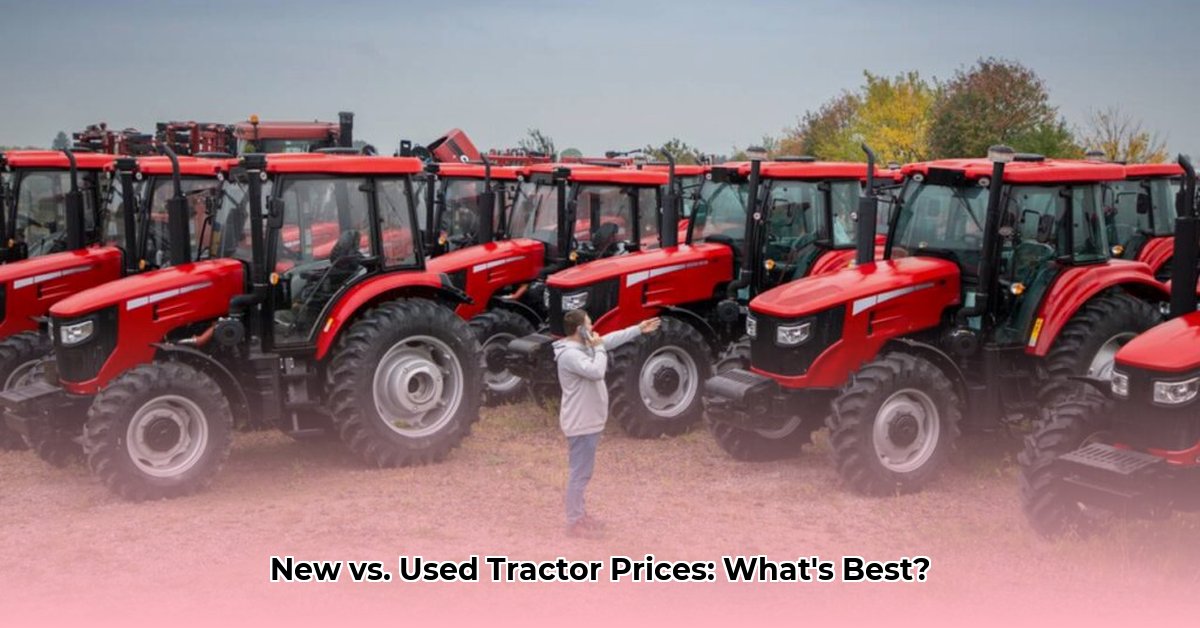
Buying a farm tractor is a major investment. This guide helps you understand the costs involved, whether you're buying new or used, and how to finance your purchase. We'll cover strategies to save money and ensure you choose the right tractor for your farm's size and needs. For more detailed information, check out this comprehensive guide.
New vs. Used Tractors: Weighing the Options
Choosing between a new and a used tractor is a critical decision. Both have advantages and disadvantages.
New Tractors: Advantages and Disadvantages
Pros:
- Advanced Technology: New tractors often include GPS guidance, auto-steering, and other features that boost efficiency and reduce labor costs (e.g., saving time and fuel).
- Warranty Coverage: Manufacturers typically provide warranties, protecting against unexpected repairs and offering peace of mind.
- Enhanced Safety Features: Modern tractors incorporate advanced safety systems, minimizing the risk of accidents.
Cons:
- High Upfront Cost: New tractors are significantly more expensive than used models, requiring substantial financing or savings.
- Rapid Depreciation: New tractors depreciate quickly, losing value the moment they’re purchased.
Used Tractors: Advantages and Disadvantages
Pros:
- Lower Purchase Price: Used tractors offer a much lower initial investment, making them more accessible to farmers with tighter budgets.
- Potentially Lower Running Costs: Depending on the tractor's condition and maintenance history, operating costs may be lower than with a new tractor.
Cons:
- Higher Repair Costs: Older tractors are more prone to breakdowns and repairs, which can be expensive and time-consuming.
- Lack of Warranty: Used tractors typically come without warranties, leaving you responsible for all repair expenses.
- Outdated Technology: Used tractors may lack the latest technology features, impacting efficiency and productivity.
Factors Affecting Tractor Costs
Several key factors determine the final price of a farm tractor:
- Horsepower (HP): Horsepower (HP) indicates engine power. Higher HP means greater power and a correspondingly higher price.
- Features: Advanced features like GPS and auto-steering significantly increase the cost, but also enhance efficiency.
- Brand: Established brands often command premium prices due to their reputation and reliability.
- Age and Hours: A tractor's age and operating hours directly influence its value. Low-hour tractors are generally more expensive.
- Attachments: Additional implements like plows or loaders add to the overall cost.
Isn't it surprising how much the seemingly small details can affect the total cost? Careful budgeting is essential!
Financing Your Tractor Purchase
Most farmers require financing to purchase a tractor. Here are some common options:
- Farm Loans: Banks and credit unions offer specialized farm loans with attractive terms for agricultural equipment.
- Government Programs: Many governments provide subsidies and grants to support farmers' equipment purchases. Check for local programs.
- Leasing: Leasing allows you to use a tractor without a large upfront payment, with monthly payments instead. However, you don't own the tractor at the lease's end.
Your Step-by-Step Tractor Buying Plan
- Assess Your Needs: Determine the tasks your tractor will perform, the acreage you farm, and the required horsepower.
- Research and Compare: Thoroughly research new and used tractors online and at dealerships. Obtain multiple quotes.
- Calculate Total Costs: Account for all expenses, including the tractor price, attachments, taxes, delivery, and potential maintenance.
- Secure Financing: Compare loan offers from different lenders to find the best interest rates and terms.
- Make an Informed Decision: Weigh the pros and cons of new versus used tractors, considering your budget and long-term ROI. This step is crucial for long-term success.
Managing Risks: Protecting Your Investment
Buying a tractor involves risks. Here’s how to mitigate them:
| Risk Factor | Mitigation Strategy |
|---|---|
| High Maintenance (Used Tractors) | Obtain a pre-purchase inspection from a qualified mechanic; budget for repairs. |
| Technology Obsolescence | Carefully assess the ROI of new technology before investing. |
| Financing Challenges | Compare loan terms; explore government grant options. |
| Parts Shortages (Older Tractors) | Build relationships with parts suppliers; maintain meticulous maintenance records. |
What's the biggest risk you're worried about and how will you mitigate it? Sharing your strategies is vital!
Calculating Return on Investment (ROI) for Tractor Upgrades
Calculating the ROI of a tractor upgrade is vital. This involves a thorough cost-benefit analysis.
Assessing Your Current Situation
Before upgrading, evaluate your existing tractor's limitations and identify areas for improvement. This assessment will help justify the upgrade cost.
Understanding the Costs
Include all relevant costs when calculating your ROI:
- Purchase Price: The initial cost of the new or used tractor.
- Maintenance and Repair: Projected maintenance and repair expenses over the tractor's lifespan.
- Fuel Costs: Estimated fuel consumption, considering the tractor’s fuel efficiency.
- Financing Costs: Interest payments and loan fees, if applicable.
- Resale Value: The anticipated resale value of the tractor at the end of its useful life.
Projecting Increased Revenue
Estimate the potential increase in revenue due to the upgrade:
- Productivity Gains: Increased acreage worked per unit of time.
- Efficiency Improvements: Reduced fuel consumption or labor costs.
- Higher Yields: Larger crop yields due to improved performance.
Accurate yield projections are crucial for a realistic ROI calculation. Consult with agricultural experts or use reliable yield forecasting tools.
The ROI Calculation
Use this simplified formula to calculate ROI:
ROI = (Net Profit / Initial Investment) x 100
Where:
- Net Profit: Increased revenue minus total costs.
- Initial Investment: The total cost of the upgrade.
Remember to factor in any applicable tax benefits or subsidies.
New vs. Used: A Comparative Analysis
| Feature | New Tractor | Used Tractor |
|---|---|---|
| Initial Cost | High | Low |
| Maintenance Costs | Generally Lower | Potentially Higher |
| Fuel Efficiency | Typically Better | Variable, often lower |
| Technology | Latest features and technology | Older technology, potential upgrades needed |
| Warranty | Usually comprehensive | Limited or nonexistent |
| Resale Value | Higher initial depreciation, then better | Lower, potentially unpredictable decrease |
With this data, you're well-equipped to make a smart decision!
Financial Planning and Scenario Analysis
Conduct various scenarios using different assumptions for interest rates, fuel costs, and yields. This helps you make a more informed decision. Consider seeking advice from a financial professional.